Monday, January 7, 2008

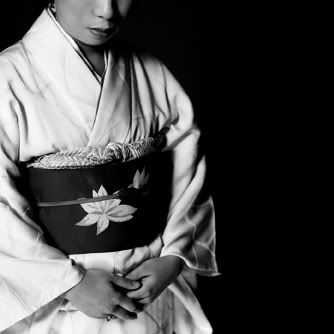
Sayuki of Asakusa

Tokyomango: http://www.tokyomango.com/tokyo_mango/2007/12/first-white-gei.html
Japantoday: http://www.japantoday.com/jp/news/423498
Telegraph UK: http://www.telegraph.co.uk/news/main.jhtml?xml=/news/2008/01/07/wgeisha107.xml
and debito's blog: http://www.debito.org/index.php/?p=876

Japan’s first ever foreign geisha
Courtesy of Sayuki

For the first time in the 400 year history of the geisha, a Westerner has been accepted, and on December 19, will formally debut under the name Sayuki.

Sayuki is specialized in social anthropology, a subject which requires anthropologists to actually experience the subject they are studying by participating in the society themselves.

Sayuki has been doing anthropological fieldwork in Asakusa - one of the oldest of Tokyo’s six remaining geisha districts - for the past year, living in a geisha house (okiya), and participating in banquets as a trainee. She has been training in several arts, and will specialize in yokobue (Japanese flute).

Sayuki took an MBA at Oxford before turning to social anthropology, and specializing in Japanese culture. She has spent half of her life in Japan, graduating from Japanese high school, and then graduated from Japan’s oldest university, Keio. Sayuki has lectured at a number of universities around the world, and has published several books on Japanese culture. She is also an anthropological film director with credits on NHK, BBC, National Geographic Channel programmes.

http://www.sayuki.net


But oh wait, even after sending out her press release to debito, and giving interviews about being "inducted into the mysteries of geisha," she wants you to forget her real name and hope you can't google her using the clues she's already provided.


SAYUKI has said:

(It has been a very long road to becoming a geisha, and has taken several years of preparation, an enormous investment, and considerable perseverance. Whatever you are imagining geisha life is like, it is a great deal harder than you know.)

I had made a decision to keep my life as an academic and my life as a geisha as separate as possible. Confusing the two could have very unwelcome implications for my my fieldwork now, particularly when I have struggled so hard to begin. I would be very grateful if those people speculating about my identity could please not do so and remove the posts.


This is purely anthro conjecture, from one card-carrying anthropologist to another, but...
To get a BA in anthro (in the States at least) you have to take at least one ethnographic methodology course, and that usually means conducting some kind of participant-observation study. Now clearly you've already written books on your first-hand research into Japanese insurance corporations.

One of the pitfalls of participatory research is not being able to separate your various selves - academic, political, familial, real-life, what have you - from the work. It's sucks, but you can't always hole yourself up in your tent and make notes in some optimal Boasian environment. Gay and lesbian researchers don't lie about their sexual orientation when the issue comes into play. Feminist researchers can't mask or hide their political viewpoints. Non-native 'outsider' anthropologists usually have to acknowledge that they just don't look like the population they're supposed to be studying. It will all come out in the work anyway, so what's the big deal about full disclosure? Is it going to compromise an already compromised identity?

Maybe anthro in the UK is just done differently, but what you ARE is hard to separate from what you are DOING. Is it a question of motivation? I can understand if you want to become a geisha because you genuinely want to become a geisha. Cool. I can understand if you want to become a geisha so you can write a book. That's fine too.

The public doesn't have to speculate. The 'secret' identity is already out, published by legitimate news sources no less. As far as I'm concerned, she opened the door on identity.

Discussion, speculation, critique - these are all sorts of 'mean' things anthropologists do to one another in their circles. If you put up a good defense in getting your doctorate, the greater public will be a cakewalk.

Saturday, October 13, 2007

Japan's oldest geisha turns 99

Japan's oldest geisha marks her 99th birthday

ATAMI, Shizuoka -- Japan's oldest active geisha, Kokin Nee-san, celebrated her 99th birthday.

Kokin has been a geisha for more than 80 years
. She still practices playing the shamisen and singing kouta songs at least once a week even now, keeping her ahead of the country's 2,800 younger geisha.

Kokin Nee-san, Japan's oldest active geisha

"I've gotta do my best for the customers," she says, adding that she hopes to be able to give a performance on her 100th birthday next year.

Kokin was born in 1909, then served as an apprentice geisha in Kofu after graduating from elementary school. Kokin celebrated her 99th birthday this week because of the old practice of counting ages as starting from 1 at birth.

Thursday, May 3, 2007

Damn you, Bill Cunningham.

On the Street: Look East

Photographs by Bill Cunningham/The New York Times

Published: April 29, 2007
(link: here)

The cherry blossoms have slip-covered the parks in their annual pink splash. And for many women attending spring benefits, Asian-style dress adds corresponding exotic decoration to the evening. From authentic Japanese kimonos to richly embroidered Indian saris, to the subtlety of a black-and-white jacket embroidered with Asian calligraphy. Others chose colossal gold ethnic jewelry.


"...Asian-style dress adds corresponding exotic decoration to the evening."

Asia = exotic. *sigh* Why don't they just say "Oriental" if they mean Oriental? Not P.C. you say? Bah, humbug.

Wednesday, March 7, 2007

Spring Kateigaho International Edition

Mainichi Daily in English

KIE gives an insider's view of rarely seen Kyoto

Kyoto's esoteric world of intricate conventions and traditions can sometimes be intimidating, especially in the hanamachi, the world of the geisha. But the spring 2007 issue of Kateigaho International Edition (KIE) (on sale March 1) provides a glimpse through the eyes of insiders that makes more accessible the ancient capital's world of geiko, as geisha are called in Kyoto.

KIE explores often unknown nooks and crannies of Kyoto -- with a strong emphasis on the city's geisha districts of Ponto-cho, Miyagawa-cho and Gion -- and finds insightful clues into what has made Miyako tick over the past 1,200 or so years.

"We have taken representatives of Kyoto's geisha world and got them to give a 'Best Picks of Kyoto,' " KIE'S Editor-in-Chief Takeshi Kudo says.

KIE's "guides" are an exotic cross-section of the 21st century version of the city. They include a Canadian who gave up the hurly burly world of professional soccer to become a Kyoto connoisseur and multi-faceted entertainer together with his Japanese wife, who is herself a former tayu, historically the most artistically adept inhabitants of Japan's floating world.

Kudo points out that the spring 2007 issue contains a bonus pictorial guide on how to dance like a Miyagawa-cho geiko, with dozens of the outstanding photos Kateigaho is known for accompanying an explanation of the seasonal elements involved in the dance.

"By covering a story to this extent, we can show readers the correct manner and customs involved in Japanese dance, even if the meaning isn't always fully passed on," Kudo says. "It's a page for a little bit of added fun."

KIE's Sales Division Manager Takeharu Suzuki agrees, adding that "this is a special containing information even the average Japanese wouldn't know of."

Also providing a slice of Kyoto life are the remarkable four generations of geiko from the Hatsunoya, a Ponto-cho geisha house whose founder has provided a direct line of performers that now includes her great-granddaughter.

Kyoto's traditions would be nothing without the long lines of artisans who have provided the talents that have kept the conventions alive, even when it would seem other choices would mean less strain.

Learn from KIE about the fascinating stories involved in the decade-long creation process of the exquisite, decorative boxwood combs the geisha use in their hair, folding fans, and the wagasa paper umbrellas still now a favorite in the ancient capital.

Adventurous types can also get an extremely close to home look at centuries-old living through KIE's introduction of a supplier to the geiko who also dresses up tourists like the geiko and maiko (apprentice geisha), using completely authentic cosmetics and costumes.

KIE's spring 2007 edition also contains an extensive -- and removable -- map and guide of some of the best wares available in Kyoto with geiko and maiko providing recommendations for 60 businesses that may be of interest to foreign visitors.

"These are places maiko and chaya recommend for eating. It's not just high class establishments, it's a bit of everything from Western food to Japanese food to cakes," Kudo says. "You can find places where geisha shop and geisha hang out."

From Kyoto to kabuki, where KIE tracks the Opera National de Paris performance of Ichikawa Danjuro and Ichikawa Ebizo. KIE goes behind the scenes at the Palais Garnier as the father-and-son superstars bring the common theater of the Edo-era (1603-1868) to the traditional home of entertainment for the French nobility.

Other features in the spring 2007 issue include KIE showcasing how the new head of one of Shikoku's best known Shinto shrines is taking a so far unseen approach to preserving cultural artifacts.

KIE also gets a bite of the action in the seasonal delicacy scene in Western Japan, giving readers a year-round calendar to get the tastiest treats on offer throughout the country.

Combined with the eye-grabbing galleries, whose charms this issue also feature a show of uniform-inspired fashions, KIE's spring 2007 is a feast for the senses, with its hands-on approach to tackling Kyoto and the literally mouth-watering look at some of Japan's incredible edibles. (Text by Ryann Connell, Photos courtesy of Kateigaho International Edition)

Kateigaho International Edition http://int.kateigaho.com/
March 1, 2007

The link at the bottom of the article features more photos:
Special Photo Preview

Tuesday, March 6, 2007

Miyako Odori Costume Fitting in Gion Kaburenjo

The dance, which commences on April 1st, now in its 135th season, will feature 114 musicians, geiko, maiko. Twenty three people were present for photographs to be published in the Odori program.

This year's theme is Elegant Picture Scroll "to furyuu meisho emaki," with the fifth act Tale of the Princess "mukashi monogatari kagu ya hime" and others: ?????? First visit to the Duck Shrine of the New Year ????? Saga field-tinted autumn leaves.
4300-1900 yen.

Photo: Ichiyuri, Kotoha, Koyuki, Mameshino, unidentifiable geiko

Sources:
Asahi Shimbun
Kyoto Shimbun

Oh, I thought it was strange that they're all wearing August kanzashii when it's Feburary, but might be due to the section of the dance (if set in late summer). These photos were all taken 22 Feb 2007.

Gion Corner in New Languages


Gion Corner will now feature an audio guide in 5 languages to introduce the traditional arts of Kyoto - English, Spanish, French, Chinese, and Korean, says the Kyoto traditional arts promotion foundation. Gion Corner, as you know, features seven traditional performances like koto and Bunraku in 45 minutes for 2800 Yen.

While in the past Japanese tourists formed a large portion of visitors, the number of foreign travelers - who used to account for almost half - have rapidly increased.

Photo: Mameyuri and Mamesaho

Source: Kyoto Shimbun 京都新聞 2007年3月1日

Monday, February 5, 2007

藤花 ~Fujika

Fujika is a former gei-maiko from the illustrious Gion Kobu. Her autobiography based on her blog has been published in Taiwain.

Fujika is actually a renegade geisha. In the mid-1990s a maiko openly sued her geisha-mother and went independent. Fujika is a geiko who followed her into a maiko-for-hire gig. There was no follow-up on the story, but their business partnership seems to have lasted a few years until the maiko got too old to play the part.

It explains why Fujika's book isn't published in Japanese, but only in Taiwan.

Life at Night blog